Coconut Curry Seared Scallops
Highlighted under: Global Flavors
When I first experimented with Coconut Curry Seared Scallops, I knew I wanted to combine the bright, bold flavors of coconut and curry with the delicate sweetness of scallops. The result was a dish that not only tantalized my taste buds but also looked stunning on the plate. The key lies in the searing process; it allows the scallops to develop a golden crust while maintaining their tender interior. This method has become a go-to for impressing guests or simply indulging in a satisfying meal at home.
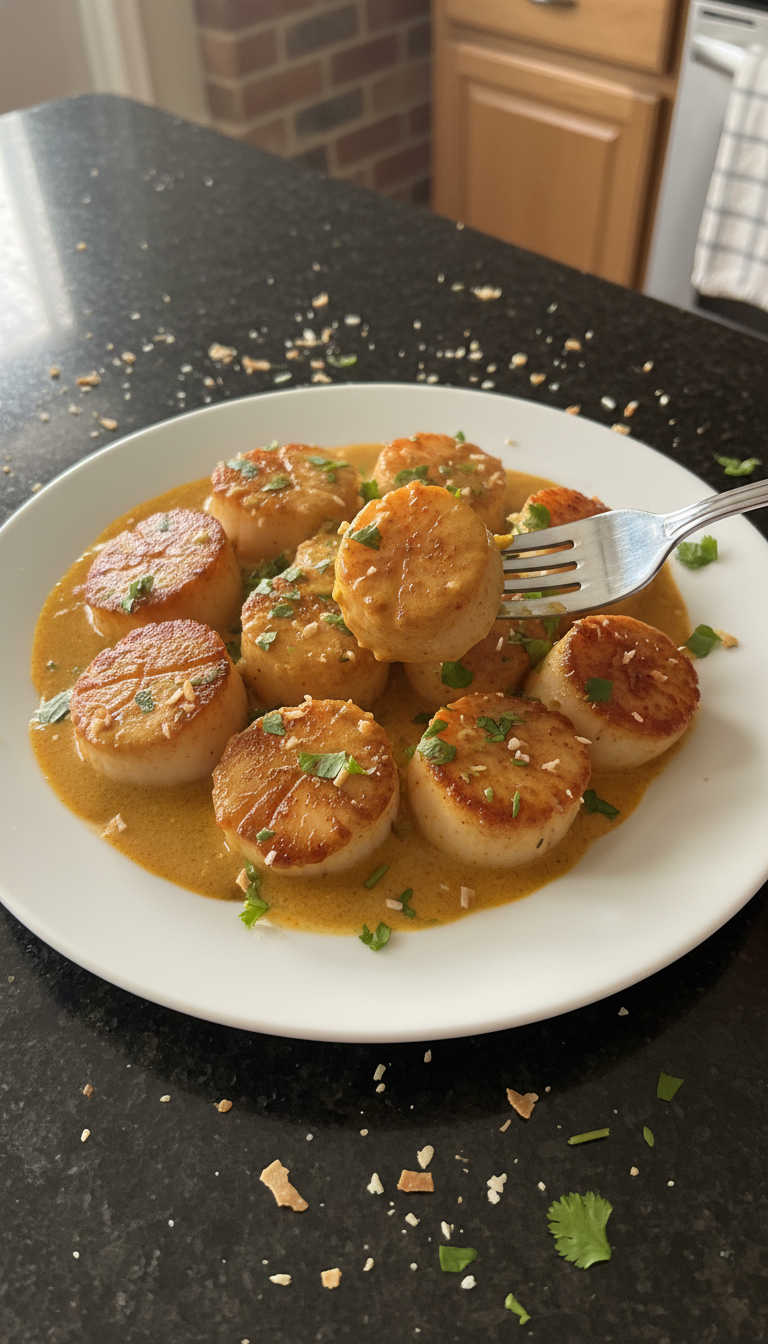
As I prepared the Coconut Curry Seared Scallops for the first time, I learned the importance of not overcrowding the pan. Each scallop needs room to breathe to develop that perfect sear. I also tried several curry blends, ultimately finding that a light, fragrant version worked best, complementing rather than overpowering the scallops' natural sweetness.
Another valuable lesson was to serve the dish immediately after cooking. I’ve made the mistake of letting them sit, and the texture suffered. With each bite, the combination of curry and coconut envelops the scallops, creating a truly memorable experience that I can’t wait to share again!
Why You'll Love This Recipe
- Exotic flavor combination that transports your taste buds
- Perfectly seared scallops with a crispy golden crust
- Quick and easy to prepare, making it ideal for weeknight dinners or special occasions
Understanding Scallops
Scallops are delicate seafood that can easily overcook, leading to a rubbery texture. To avoid this, ensure you are using large, fresh scallops that are dry-packed rather than wet-packed. Wet-packed scallops have been treated with a chemical solution that can cause them to retain excess moisture, resulting in steaming rather than searing. This dish shines best when you achieve that perfect golden crust, which is best achieved with dry scallops. Dry scallops can also soak up the flavors of your curry sauce even better.
When prepping your scallops, be sure to remove the side muscle, a small, tough piece on the side of each scallop. Skipping this step can lead to an unpleasant texture. For the best results, pat the scallops dry thoroughly with paper towels before seasoning. This helps to promote that beautiful golden crust during the searing process. If your scallops are still wet, they may steam instead of sear, diminishing the flavor and texture of the final dish.
The Art of Searing
Searing is a crucial technique in this recipe for Coconut Curry Seared Scallops. To achieve that crispy exterior, it is essential to use high heat and ensure your skillet is hot enough before adding the scallops. Look for the coconut oil to shimmer on the surface before introducing the scallops; this is a good indicator that the oil is hot enough to sear effectively. If the oil isn't hot enough, the scallops will stick and won’t develop the desirable crust.
Do not overcrowd the skillet; cook the scallops in batches if necessary. Each scallop should have enough space to make direct contact with the pan, allowing for even browning. When they are perfectly seared, you’ll notice that the edges should be golden brown and the insides remain tender and juicy. After about 2-3 minutes on each side, the scallops will be ready to be removed from the pan. Remember, residual heat will continue to cook them slightly even after they're removed, so aim for a slightly undercooked center.
Enhancing Your Coconut Curry Sauce
The coconut milk in this dish not only adds a creamy texture but also balances the spices in the curry powder. For a more complex flavor, consider using a homemade or high-quality store-bought coconut milk, as its richness lends deeper notes to the sauce. If you prefer a thinner sauce, you can add a splash of vegetable broth or more coconut milk, adjusting the viscosity to your taste. Adding seasonings like a dash of lime juice can also enhance the dish when serving.
For those looking to make this dish a bit more vibrant, vegetables such as bell peppers or snap peas can be sautéed alongside the scallops in the same skillet after searing them. This adds color, texture, and nutrition, making the dish even more appealing. Alternatively, you could serve the scallops over a bed of jasmine rice or quinoa, which perfectly absorbs the luscious coconut curry sauce. Just remember that coconut curry is flexible, so feel free to experiment with different vegetables and grains.
Ingredients
Gather the following ingredients to prepare this flavorful dish:
Ingredients for Coconut Curry Seared Scallops
- 8 large scallops
- 1 tablespoon coconut oil
- 1 tablespoon curry powder
- 1/2 cup coconut milk
- Salt and pepper to taste
- Chopped cilantro for garnish
Make sure to have these ingredients fresh for the best results!
Instructions
Follow these steps to create your Coconut Curry Seared Scallops:
Prepare the Scallops
Rinse the scallops under cold water and pat them dry with paper towels. Season both sides with salt and pepper.
Heat the Oil
In a skillet, heat the coconut oil over medium-high heat until shimmering.
Sear the Scallops
Carefully place the scallops in the skillet and sear for about 2-3 minutes on each side until golden brown. Remove from the skillet and set aside.
Make the Sauce
In the same skillet, reduce the heat and add the curry powder, stirring for about 1 minute. Pour in the coconut milk and simmer for 2-3 minutes until slightly thickened.
Combine and Serve
Return the scallops to the skillet and coat them in the sauce. Serve immediately, garnished with chopped cilantro.
Enjoy the vibrant flavors of your dish!
Pro Tips
- For best results, choose dry scallops that have not been treated with preservatives, as they will sear better and have a more pronounced flavor.
Storage and Reheating
If you find yourself with leftovers, storing them properly can maintain their flavor and texture. Place scallops and the coconut curry sauce in an airtight container and refrigerate. They should be consumed within 2-3 days for the best quality. However, keep in mind that reheating scallops can lead to further cooking, making them chewy. To minimize this, reheat them gently in a skillet over low heat with a splash of coconut milk until warmed through.
For longer storage, consider freezing the coconut curry without the scallops. The sauce freezes well for up to a month. When you're ready to use it, simply thaw in the refrigerator overnight and reheat gently. Searing fresh scallops just before serving ensures you retain their perfect texture. This approach gives you the advantage of having a base ready while keeping the scallops freshly cooked.
Diets and Allergies
This recipe can be easily adapted for various dietary needs. For a plant-based option, substitute the scallops with firm tofu or a seafood alternative. Make sure to press and dry your tofu thoroughly before searing to ensure it crisps up nicely. Additionally, many curry powders can contain allergens, so opt for brands that meet your dietary requirements, especially if you're cooking for someone with specific sensitivities or allergies.
To reduce calories or fat content, consider using light coconut milk instead of full-fat coconut milk. While this may slightly alter the creamy texture, it still provides a delightful flavor profile. Always check ingredient labels when purchasing canned goods to avoid any unwanted additives, and remember that fresh or dried herbs can be used as a garnish to enhance flavor without the need for extra calories.
Questions About Recipes
→ Can I substitute shrimp for scallops?
Yes, shrimp will work well in this recipe, just adjust the cooking time as shrimp cook faster than scallops.
→ Can I make the curry sauce ahead of time?
Absolutely! You can prepare the curry sauce in advance and store it in the fridge; just reheat before adding the scallops.
→ What can I serve with this dish?
This dish pairs well with jasmine rice or a fresh green salad to balance the richness of the curry.
→ Is this dish suitable for meal prep?
While scallops are best served fresh, you can prepare the sauce and reheat it when ready to serve, adding fresh scallops for a quick meal.
Coconut Curry Seared Scallops
Created by: The Savormile Team
Recipe Type: Global Flavors
Skill Level: Intermediate
Final Quantity: 2 servings
What You'll Need
Ingredients for Coconut Curry Seared Scallops
- 8 large scallops
- 1 tablespoon coconut oil
- 1 tablespoon curry powder
- 1/2 cup coconut milk
- Salt and pepper to taste
- Chopped cilantro for garnish
How-To Steps
Rinse the scallops under cold water and pat them dry with paper towels. Season both sides with salt and pepper.
In a skillet, heat the coconut oil over medium-high heat until shimmering.
Carefully place the scallops in the skillet and sear for about 2-3 minutes on each side until golden brown. Remove from the skillet and set aside.
In the same skillet, reduce the heat and add the curry powder, stirring for about 1 minute. Pour in the coconut milk and simmer for 2-3 minutes until slightly thickened.
Return the scallops to the skillet and coat them in the sauce. Serve immediately, garnished with chopped cilantro.
Extra Tips
- For best results, choose dry scallops that have not been treated with preservatives, as they will sear better and have a more pronounced flavor.
Nutritional Breakdown (Per Serving)
- Calories: 300 kcal
- Total Fat: 21g
- Saturated Fat: 15g
- Cholesterol: 40mg
- Sodium: 150mg
- Total Carbohydrates: 12g
- Dietary Fiber: 2g
- Sugars: 4g
- Protein: 18g